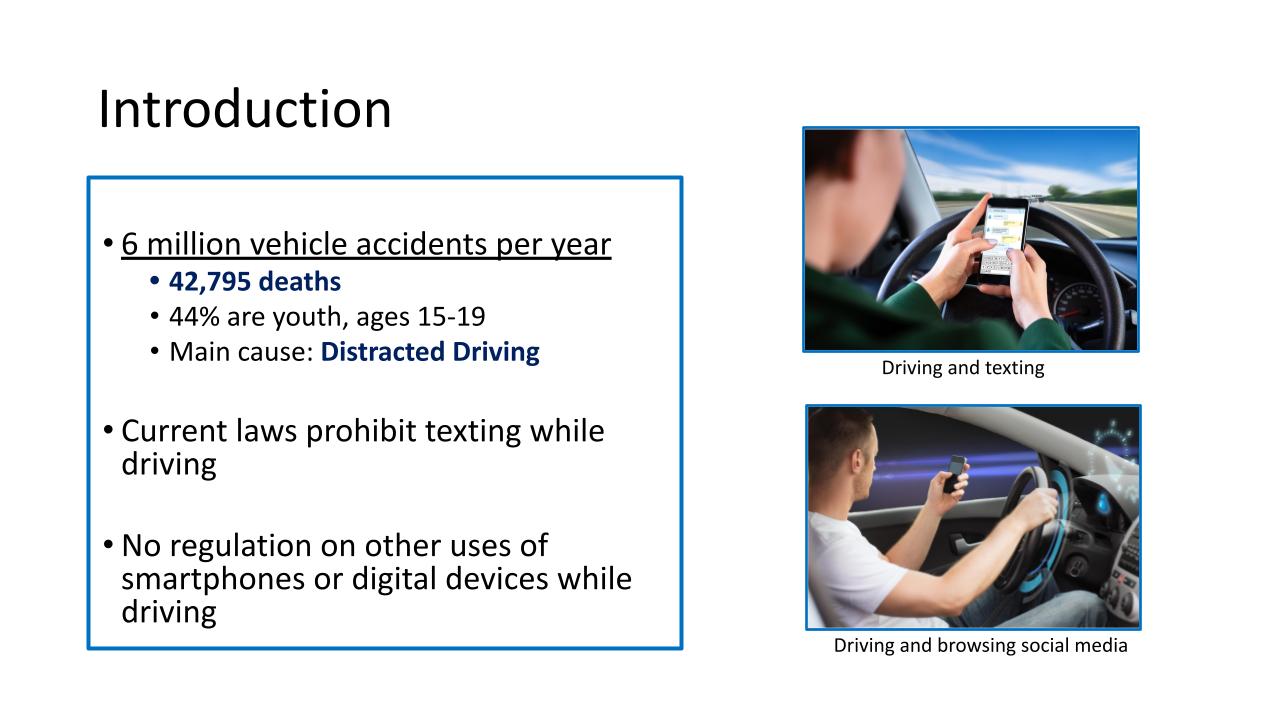
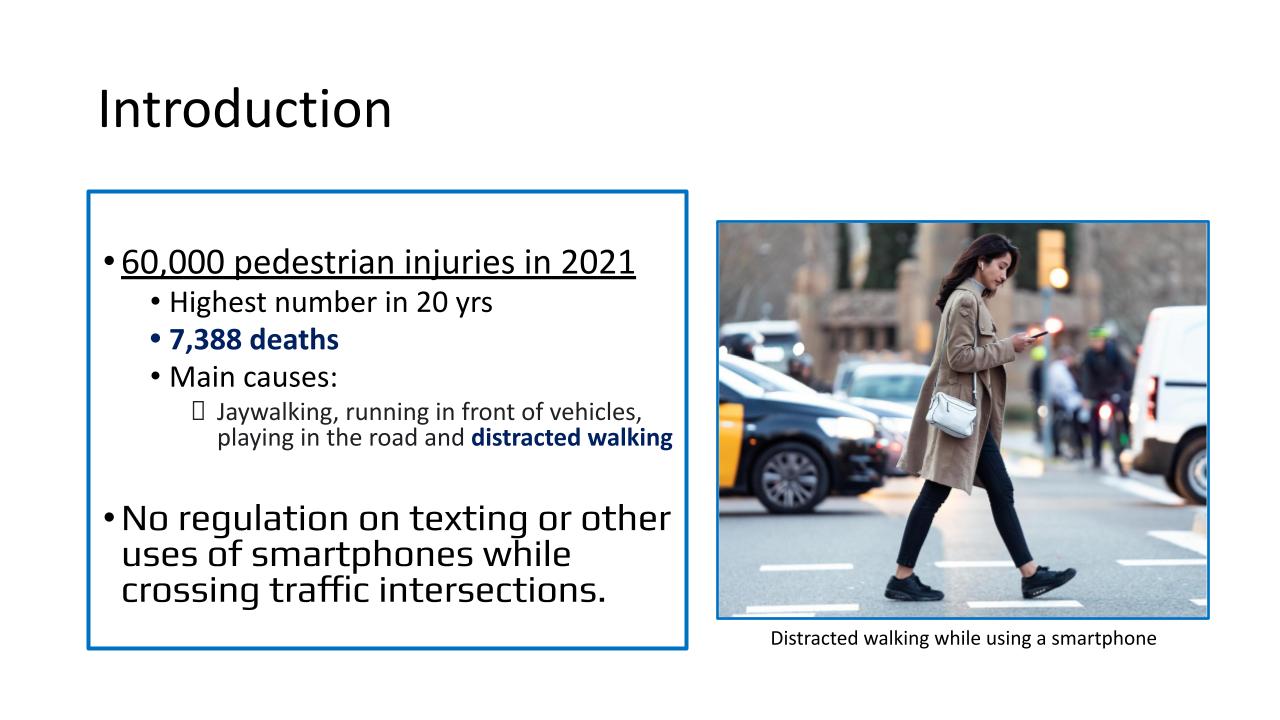
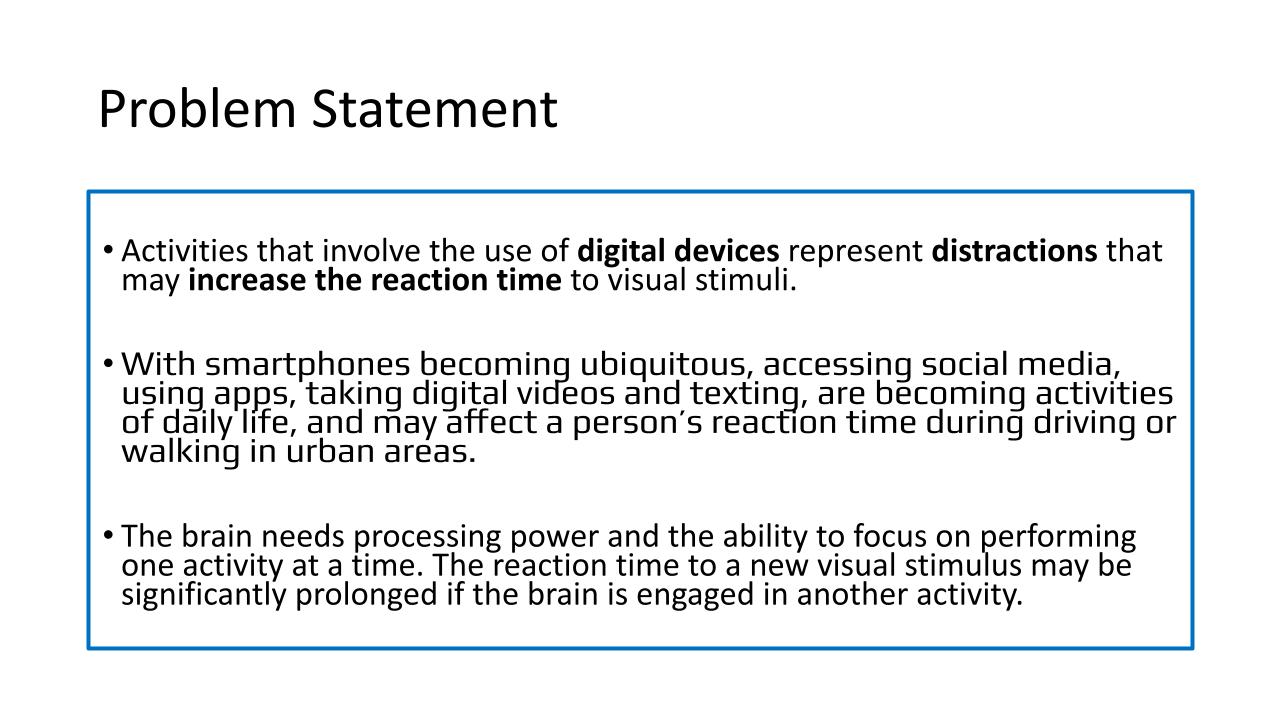
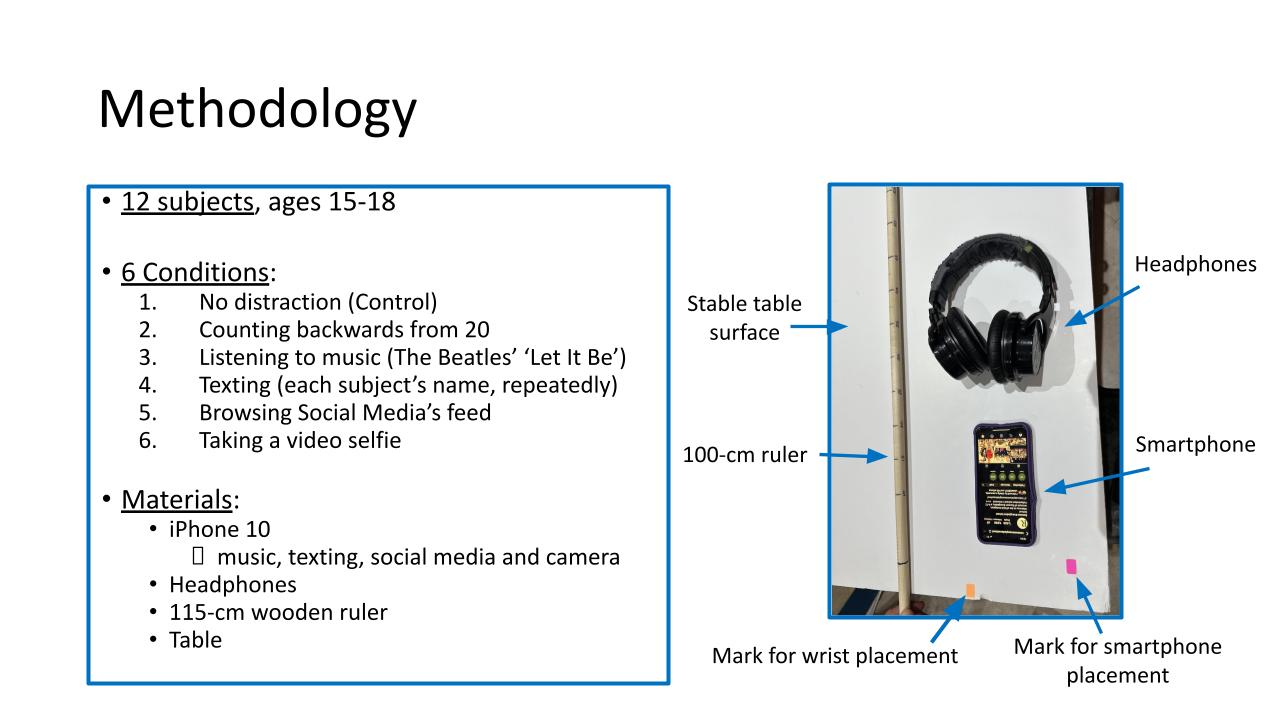
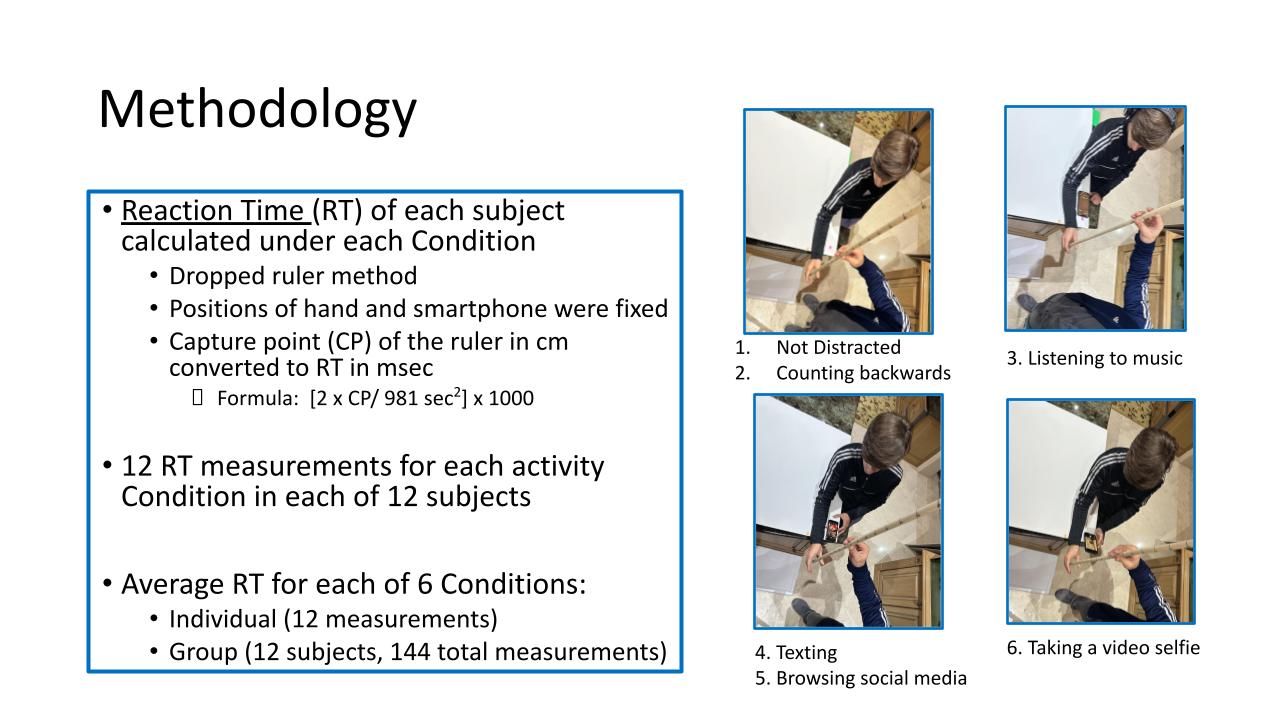
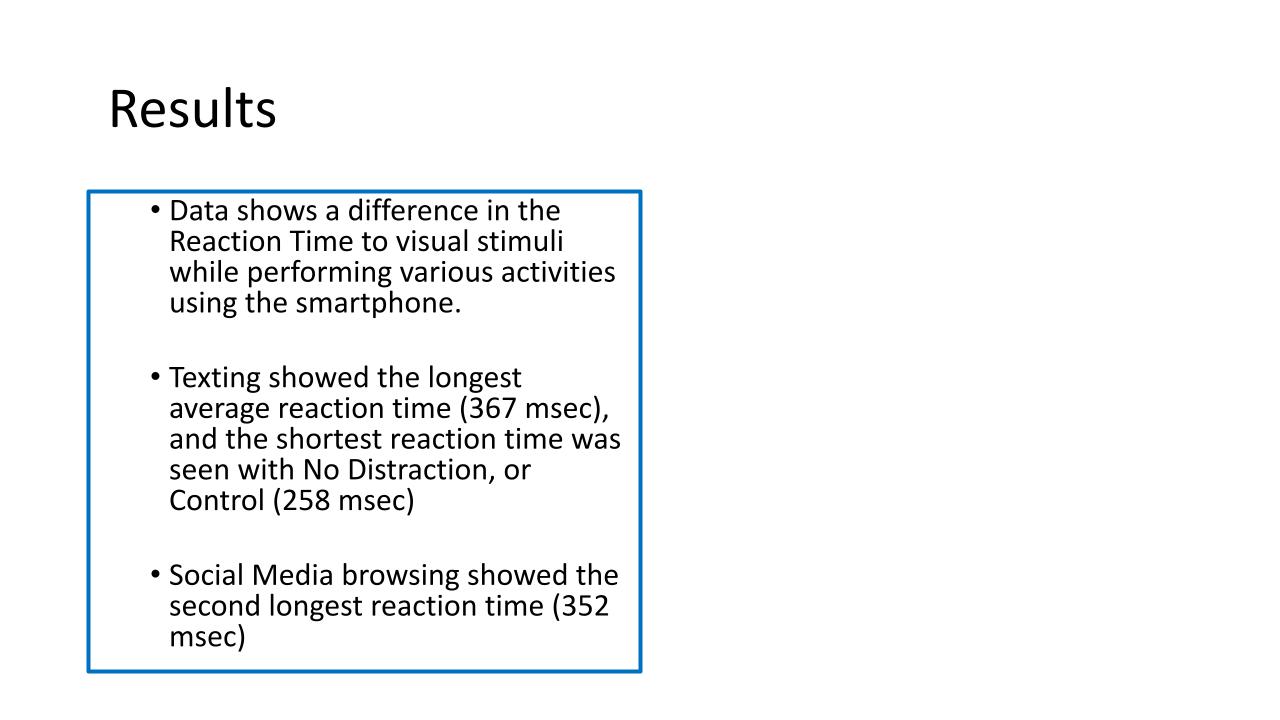
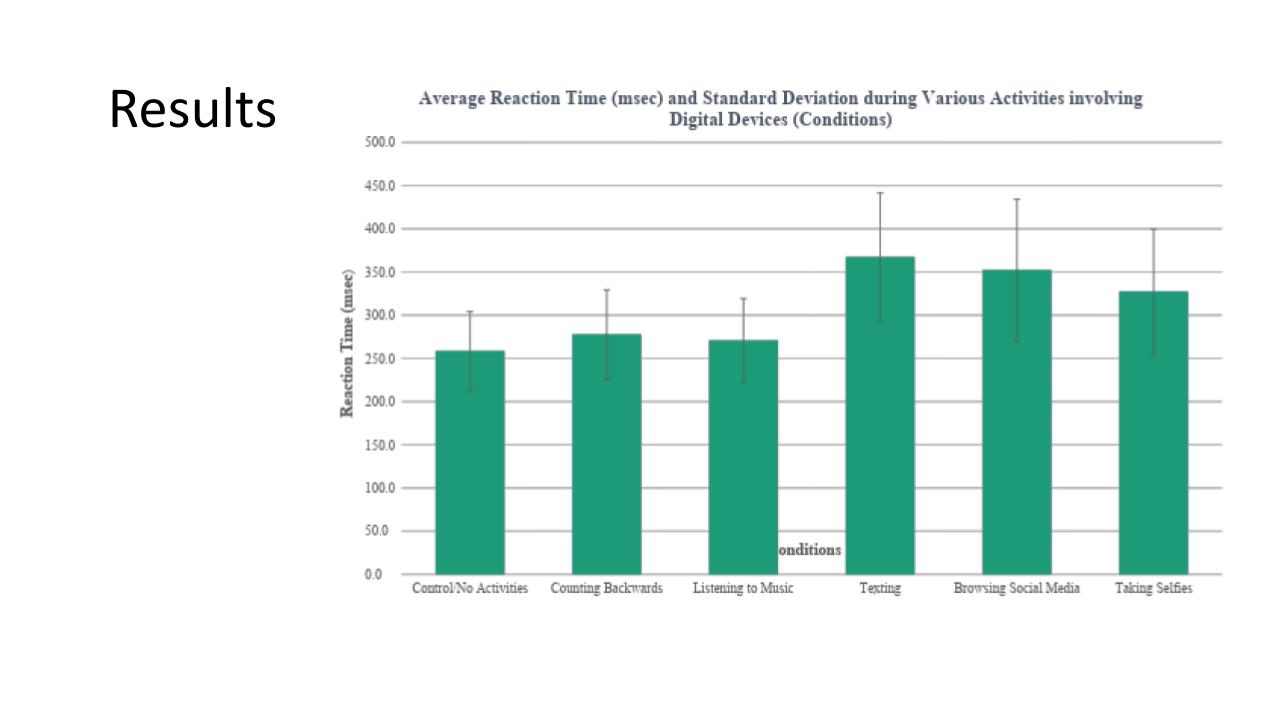
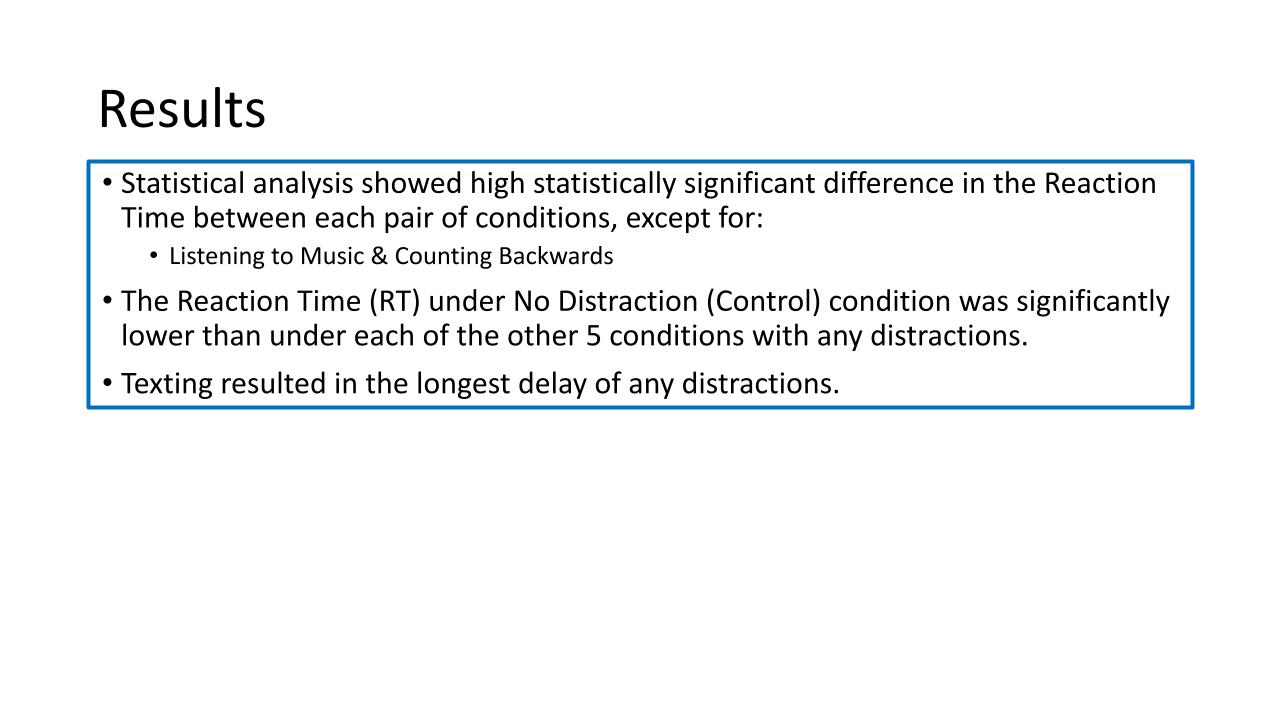
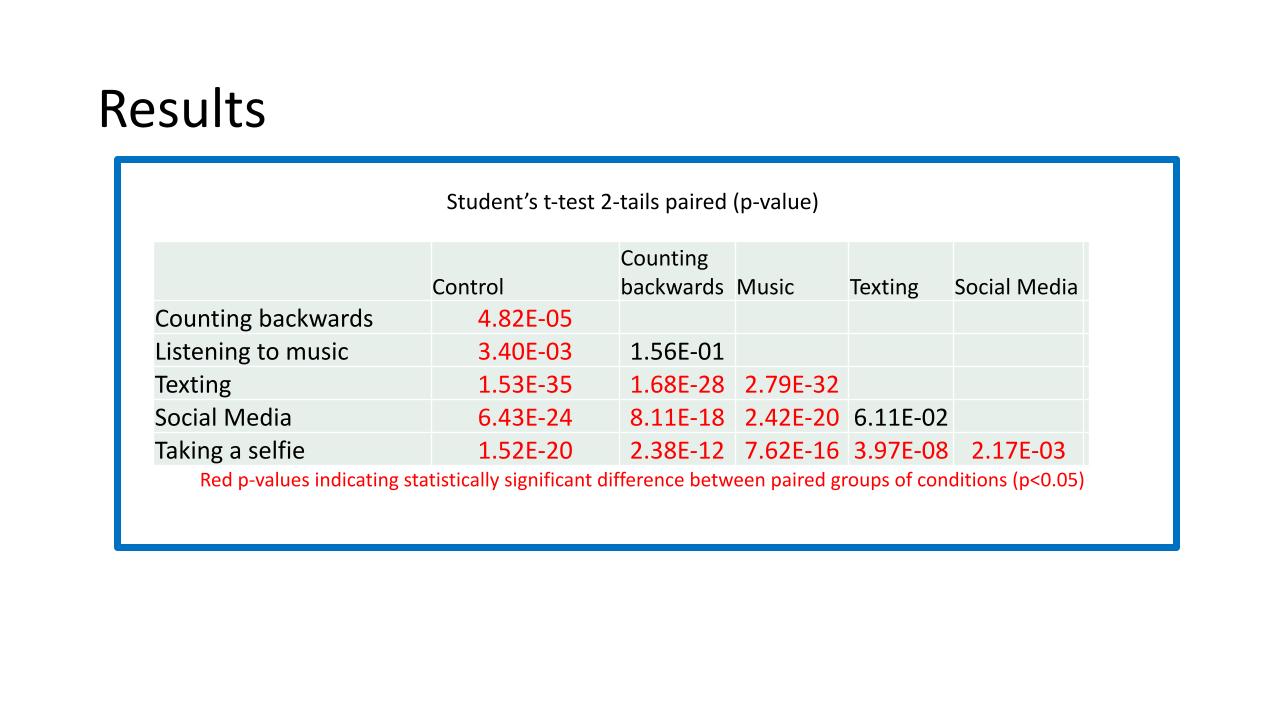
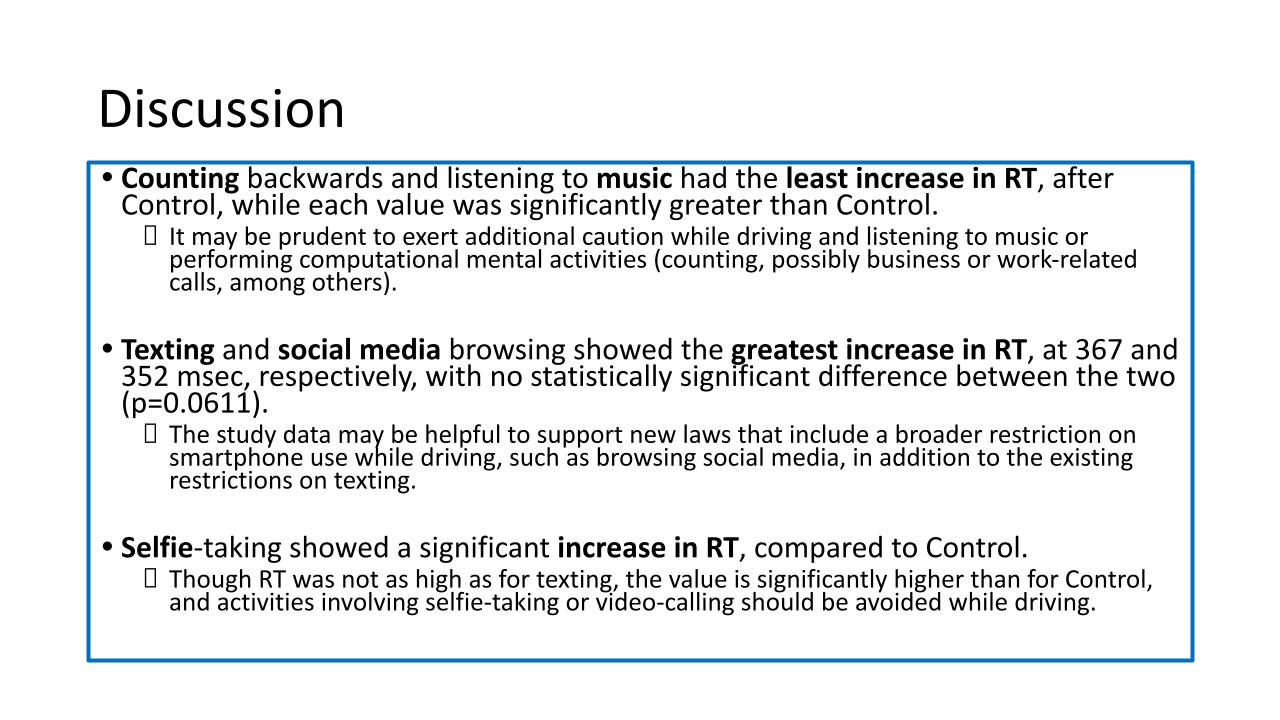
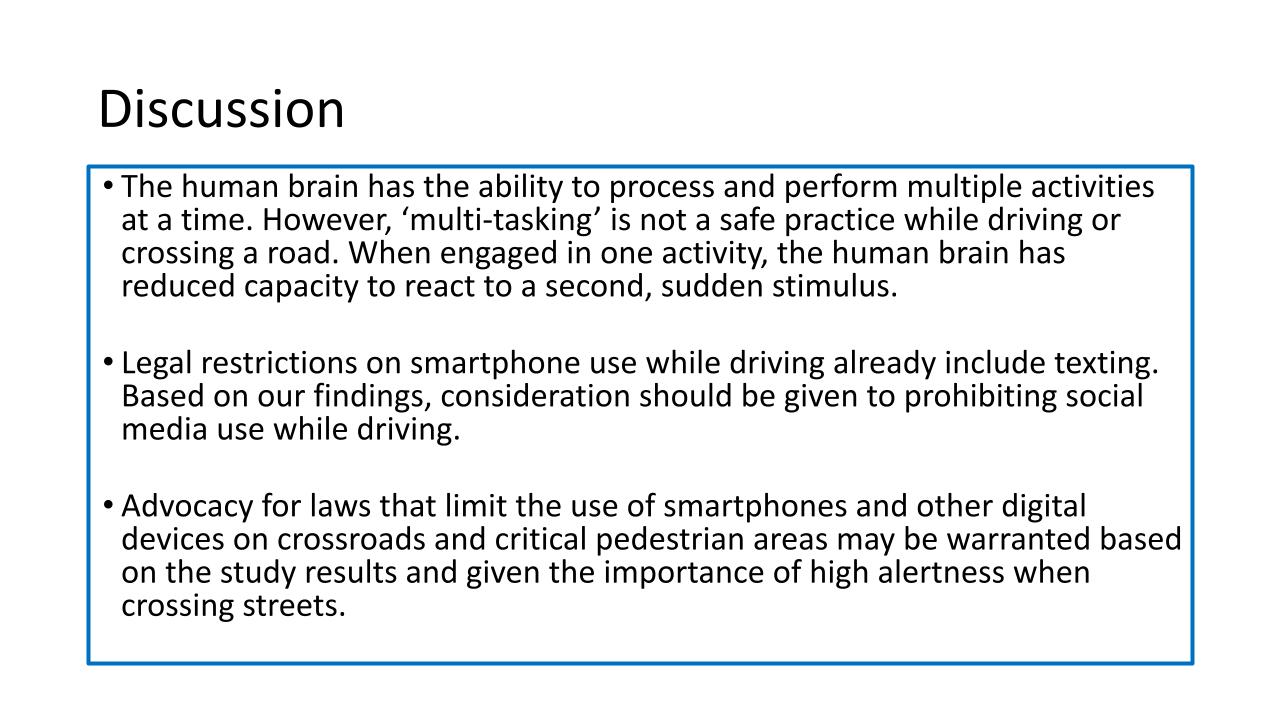
Concerned about the high prevalence of fatal traffic accidents resulting from the use of cell phones and, specifically, social media apps while driving, we decided to conduct a study testing changes in visual reaction time under various distraction conditions. The distraction conditions included: listening to music, performing mental calculations, talking on the phone, scrolling through social media, and doing FaceTime or video calls. The results of our study showed that scrolling through social media had twice the delay in visual reaction time as compared to other common activities like listening to music, which did not increase risk. Therefore, we shared our findings with the judges of the South Florida Regional Science and Engineering Fair in January 2024, and are planning to publish the results of our study to spread awareness about this critical issue.
Syed Muhammad UmairArif, Michele Brizzi, Marco Carli, Federica Battisti.Human reaction time in a mixed reality environment. Frontiers in Neuroscience, 19 August 2022, Sec. Perception Science. Volume 16 – 2022
Sternberg, S. et al. Reaction Time Experimentation. Psychology Journal, March 2010